
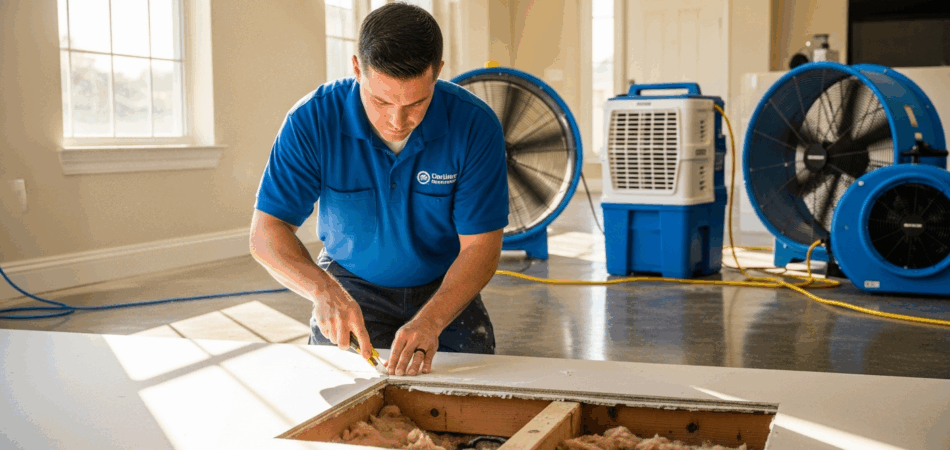
Water damage to drywall is among the most frequent property issues Tampa Bay homeowners face. Between Florida’s hurricane season, sudden afternoon storms, and aging plumbing systems, the question is rarely if your drywall will encounter water but when. Acting quickly and following the right repair process makes the difference between a simple fix and a full-scale renovation. This comprehensive guide covers every stage of water damage drywall repair, from identifying the problem to completing the restoration and preventing future damage.
Key Takeaways
- Speed matters: Drywall absorbs water fast, and mold can begin growing within 24 to 48 hours of exposure.
- Find and stop the source first: Repairing drywall without fixing the water source guarantees repeat damage.
- Severity determines the approach: Minor staining may only need cosmetic repair, while saturated or crumbling drywall requires full replacement.
- Professional restoration is safer for large-scale damage: IICRC-certified technicians have the equipment and training to handle contaminated water, structural concerns, and hidden moisture.
- Prevention saves money: Regular plumbing inspections, proper ventilation, and quick leak response minimize long-term repair costs.
How Water Damages Drywall
Drywall (also called sheetrock) is made from a gypsum core sandwiched between paper facings. Both materials readily absorb moisture. When water contacts drywall, several things happen:
For more on stopping mold before it starts, read our guide on preventing mold growth after water damage.
To protect your home from mold while repairing drywall, follow our complete mold prevention guide. Understanding the role of dehumidifiers in water damage restoration can also speed up your drying process.
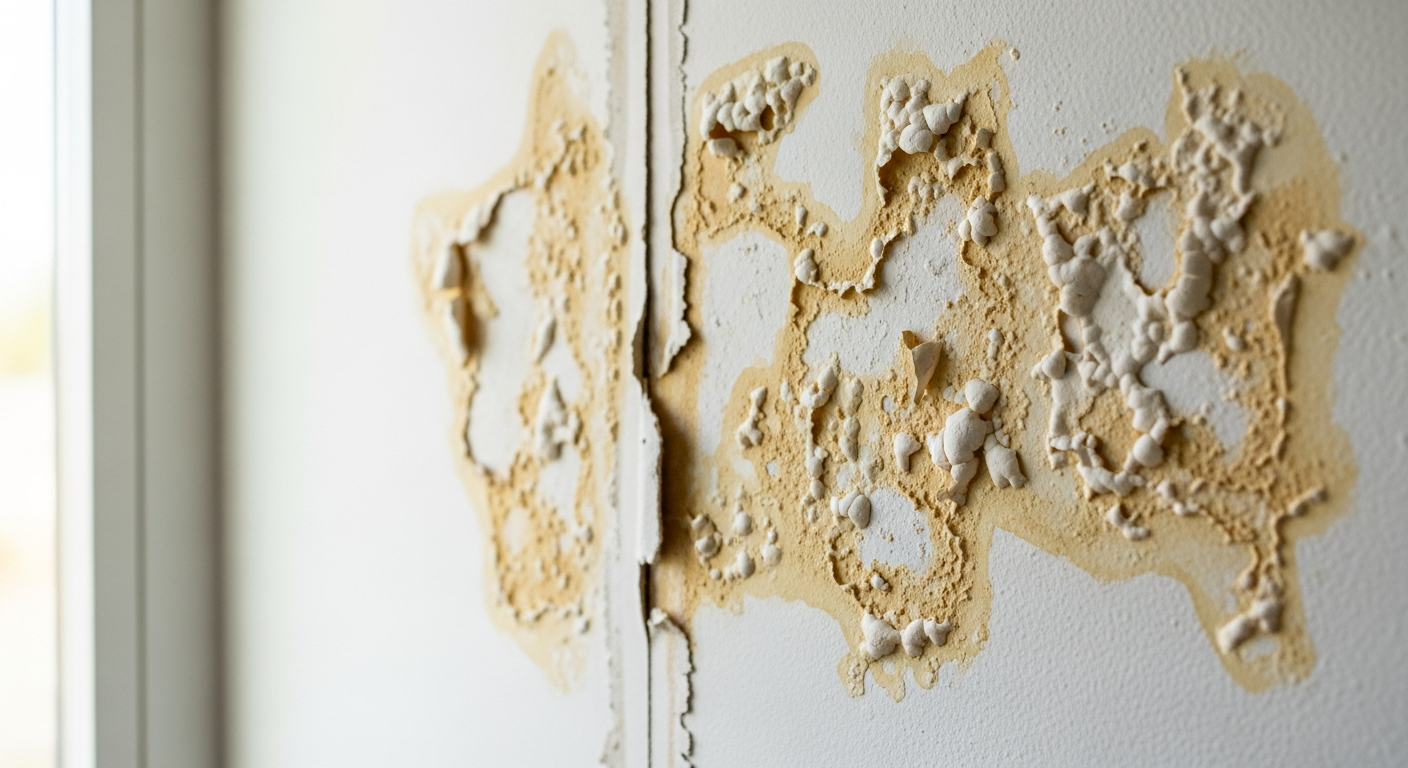
- The paper facing absorbs water and weakens. This shows up as bubbling, peeling, or discoloration, typically a yellowish-brown stain.
- The gypsum core swells and softens. Saturated gypsum loses structural integrity, becoming spongy or crumbly when pressed.
- Mold colonizes the moist surface. Mold spores are everywhere in Florida’s humid air. Wet drywall provides the food source and moisture they need to start growing, sometimes within just 24 hours.
- Structural connections weaken. Nails and screws holding drywall to studs can lose their grip when surrounding material degrades, and repeated moisture exposure can damage the wooden framing behind the wall.
Understanding this progression is key to choosing the right repair approach: the further along the damage, the more extensive the fix.
Identifying Water Damage in Drywall
Before you can repair the damage, you need to find it. Water travels along unexpected paths: gravity pulls it downward through wall cavities, and capillary action can wick it sideways. Look for these signs:
Visual Indicators
- Staining: Yellow, brown, or copper-colored marks on walls or ceilings
- Paint changes: Bubbling, peeling, cracking, or flaking paint
- Warping: Walls that bow, bulge, or appear uneven
- Mold growth: Black, green, or white spots, especially in corners and behind furniture
Tactile Indicators
- Softness: Drywall that gives when pressed gently
- Dampness: Walls that feel cool or moist to the touch
- Crumbling: Material that flakes or breaks apart under light pressure
Other Clues
- Musty odors: A persistent earthy or damp smell, even without visible damage
- Increased humidity: Rooms that feel more humid than usual
- Water meter activity: The meter running when all fixtures are off suggests a hidden leak
If you suspect water damage but cannot see it, professional moisture detection tools such as thermal imaging cameras and pinless moisture meters can locate hidden moisture behind walls without cutting into the drywall.
Step-by-Step Water Damage Drywall Repair Process
Step 1: Stop the Water Source
Every successful repair starts here. Common sources in Tampa homes include:
- Roof leaks from storm damage or aging shingles
- Burst or leaking pipes behind walls
- Failed plumbing fixtures (water heaters, toilets, washing machines)
- Poor exterior drainage directing water toward the foundation
- AC condensate line backups
If you cannot identify or stop the source, call a professional immediately. Drywizard Restoration offers 24/7 emergency plumbing services and can locate hidden leaks using advanced detection equipment.
Step 2: Assess the Damage Severity
Press the affected area gently. The result tells you what kind of repair you need:
| Condition | What It Means | Repair Type |
|---|---|---|
| Stained but firm | Surface damage only; structure intact | Cosmetic repair (prime and paint) |
| Slightly soft, small area (under 12 inches) | Moderate damage, limited scope | Cut and patch |
| Soft, spongy, or crumbling over a large area | Severe damage; compromised structure | Full section replacement |
| Visible mold or contaminated water | Health and safety risk | Professional restoration required |
Step 3: Dry the Area Completely
This step is critical. Any remaining moisture trapped behind new material will cause mold growth and repeat damage.
- Remove standing water with wet vacuums or pumps
- Set up air circulation with fans pointed at the affected area
- Run dehumidifiers to pull moisture from the air and wall cavities
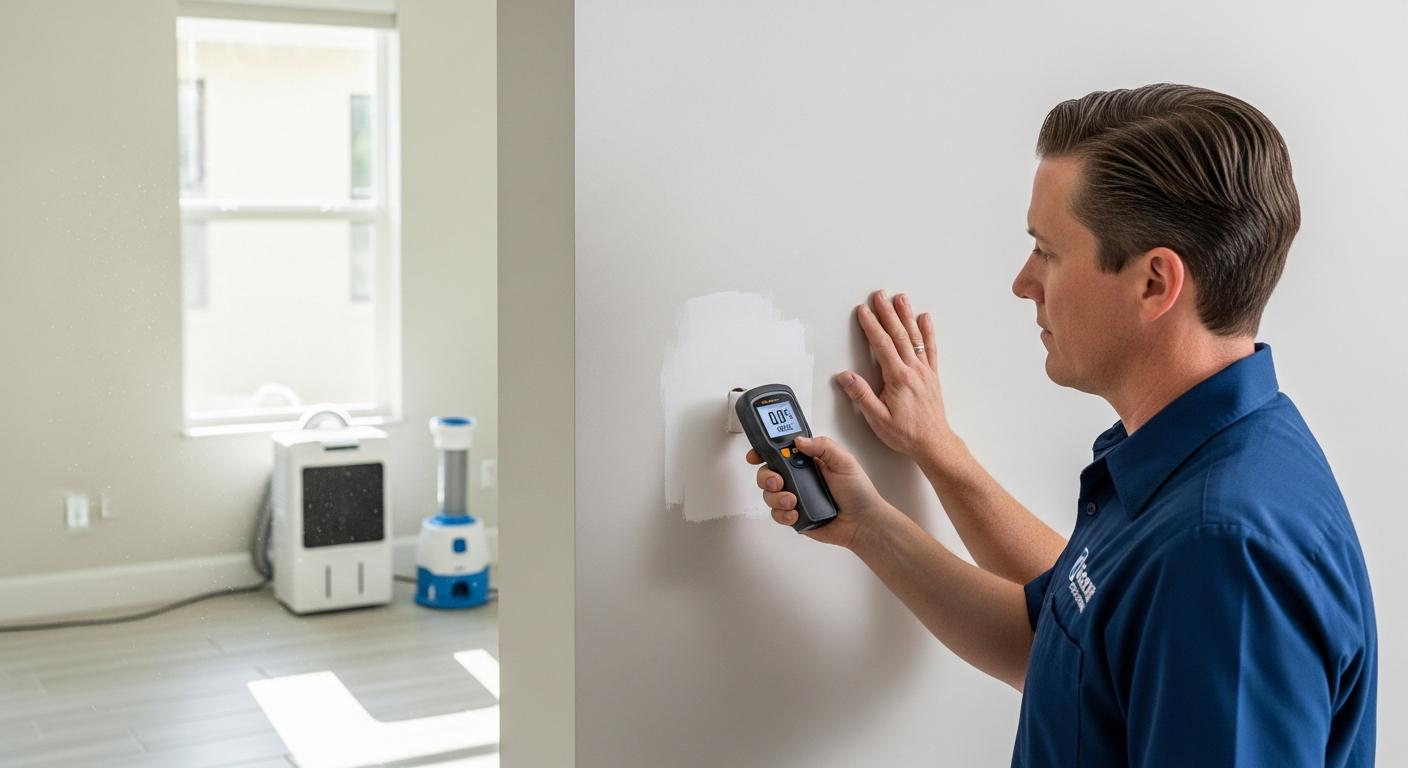
- Verify dryness with a moisture meter before proceeding; readings should be below 1% for drywall
Professional restoration companies use industrial-grade dehumidifiers and air movers that can dry a room in a fraction of the time consumer equipment requires. For a Tampa home in peak summer humidity, professional drying equipment makes a significant difference.
Step 4: Remove Damaged Material
For patches and replacements:
- Score the damaged area using a utility knife. Cut in a rectangle slightly larger than the damaged zone, extending to the nearest studs on each side when possible.
- Remove the damaged drywall carefully. Check the insulation and framing behind it for moisture, mold, or structural damage.
- Inspect the cavity thoroughly. If you find mold on studs or insulation, these must be treated or replaced before closing the wall.
- Clean and treat exposed framing with an anti-microbial solution to prevent future mold growth.
Step 5: Install New Drywall
- Cut replacement drywall to match the opening size. Standard residential drywall is 1/2-inch thick, but measure the existing material to ensure a match.
- Secure with drywall screws into studs, spacing screws approximately 12 inches apart.
- Apply joint tape over all seams and joints.
- Apply joint compound (mud) in thin layers, letting each coat dry fully before applying the next. Most repairs require three coats.
- Sand smooth between coats and after the final application for a seamless finish.
Step 6: Prime and Paint
- Use a stain-blocking primer (such as a shellac-based or oil-based primer) to prevent water stains from bleeding through new paint.
- Match the existing paint color and finish. Bring a chip to a paint store for computer color matching if needed.
- Apply two coats of paint for consistent coverage and finish.
When to Call a Professional
While small patches are within reach of a confident DIYer, several situations call for professional help:
- Contaminated water: Sewage backups, flooding, or gray water from appliances carry bacteria and require specialized handling per IICRC S500 standards.
- Large-scale damage: Multiple walls or rooms affected means structural drying is essential before any repairs begin.
- Mold presence: Any visible mold or persistent musty odor needs professional assessment. Disturbing mold incorrectly releases spores throughout the home.
- Ceiling damage: Water-saturated ceiling drywall is heavy and can collapse without warning, posing a safety hazard.
- Insurance claims: Professional documentation of the damage, including moisture readings and photo evidence, supports your insurance claim and ensures proper scope of repairs.
Drywizard Restoration & Drywall handles the entire process, from emergency water extraction and structural drying through complete drywall repair and finishing, all backed by IICRC certification.
Cost Factors for Water Damage Drywall Repair
Several variables affect the total cost of repair:
- Extent of damage: A single small patch costs far less than replacing entire walls across multiple rooms.
- Water category: Clean water (Category 1) requires less remediation than gray water (Category 2) or black water/sewage (Category 3).
- Mold remediation: If mold is present, remediation adds to the overall cost but is essential for safe living conditions.
- Structural repairs: Damaged framing, insulation, or electrical components behind the wall increase the scope and cost.
- Location and access: Ceiling repairs and areas behind cabinetry or fixtures require more labor.
Most homeowners insurance policies cover sudden and accidental water damage (like a burst pipe) but may not cover gradual damage from a slow leak. Contact your insurance provider early in the process. Drywizard works with insurance companies through direct billing, simplifying the claims process.
Preventing Future Water Damage to Drywall
Prevention is always less expensive than repair. Tampa homeowners should:
- Inspect plumbing annually, including supply lines, water heaters, and fixtures
- Maintain roof and gutters, clearing debris and repairing damage after storms
- Monitor indoor humidity and keep it below 60% using dehumidifiers or AC systems
- Install water leak detectors near water heaters, washing machines, and under sinks
- Address leaks immediately, even small ones; a slow drip wastes water and invites mold
- Ensure proper drainage away from the foundation with grading and downspout extensions
- Schedule annual AC maintenance including condensate drain line clearing
Frequently Asked Questions
How long does it take for water to damage drywall?
Drywall begins absorbing water immediately upon contact. Visible damage such as staining and softening can appear within hours. Mold growth can start within 24 to 48 hours in Florida’s warm, humid climate, making fast response critical.
Can water-damaged drywall be saved, or does it always need replacement?
It depends on severity. Drywall that is only stained but remains structurally firm can usually be primed and painted. Drywall that is soft, warped, crumbling, or has mold growth must be cut out and replaced to prevent ongoing problems.
How much does water damage drywall repair cost?
Costs vary widely based on the size of the damaged area, water contamination level, and whether mold remediation is needed. Small patch repairs may cost a few hundred dollars, while large-scale restoration involving multiple rooms can run several thousand. Getting a free estimate is the best way to understand your specific situation.
Does homeowners insurance cover water damage drywall repair?
Most policies cover sudden and accidental damage such as burst pipes or appliance failures. Gradual damage from long-term leaks or deferred maintenance is typically excluded. File your claim promptly and document everything with photos and professional moisture readings.
Should I repair water-damaged drywall myself or hire a professional?
Small, isolated patches from clean water are manageable as a DIY project. For large areas, contaminated water, ceiling damage, mold presence, or insurance claims, professional restoration is the safer and more reliable choice. IICRC-certified professionals have the equipment to detect hidden moisture and ensure complete drying before repairs begin.
How do I know if there is mold behind my water-damaged drywall?
Signs include a persistent musty odor, visible mold spots on the wall surface, recurring allergic symptoms among household members, and high moisture readings on the wall. A professional inspection with moisture meters and, if needed, air quality testing provides definitive answers.
Protect Your Tampa Home from Water Damage
Water damage to drywall is a common challenge for Tampa Bay homeowners, but it does not have to become a disaster. Quick identification, proper drying, and the right repair approach protect your home’s structure and your family’s health. For more guidance, see our guide on 5 things to do when your home is damaged by water.
If you are dealing with water damage and need help, Drywizard Restoration & Drywall is available 24/7 for emergency response across Hillsborough, Pasco, and Pinellas counties. Our IICRC-certified team handles everything from water extraction and structural drying to complete drywall repair and finishing. Contact us or call (813) 684-4800 for a free estimate.