
The most obvious problem after a flood is the water you can see. Your first instinct is to get it out as fast as possible. But the real danger often lies in what’s hidden. Moisture seeps deep into drywall, insulation, and subflooring, creating a perfect breeding ground for mold and slowly compromising your home’s structure. Mold can start to grow in as little as 24 hours, posing serious health risks long after the water is gone. This is why professional flood damage restoration services are so critical. They don’t just remove the visible water; they use specialized equipment to find and eliminate hidden moisture, ensuring your home is truly dry, safe, and structurally sound.
Key Takeaways
- Time is Your Biggest Enemy After a Flood: Mold can begin growing in just 24 hours, and water quickly causes lasting structural damage. Calling a professional immediately is the most important step you can take to protect your property and keep repair costs from escalating.
- Proper Restoration is a Science, Not a DIY Job: True restoration goes far beyond surface-level cleanup. It’s a detailed process using industrial-grade equipment for water extraction, thorough drying, and sanitizing to eliminate hidden moisture and prevent future health hazards.
- Not All Restoration Companies Are Created Equal: Protect yourself by choosing a team with key qualifications like IICRC certification, 24/7 emergency availability, and positive local reviews. These credentials are your best guarantee that the job will be done right the first time.
What Is Flood Damage Restoration?
When your home or business is hit by a flood, the aftermath can feel overwhelming. Flood damage restoration is the professional process of cleaning up, drying out, and repairing your property to get it back to its pre-damage condition. It’s much more than just sopping up water with towels; it’s a systematic approach that uses specialized equipment and techniques to handle everything from water extraction to structural repairs. Think of it as a complete recovery plan for your property.
The process involves several critical stages, each one building on the last. It starts with an emergency response to remove standing water, followed by a thorough drying and dehumidifying phase. After that, professionals focus on cleaning, sanitizing, and taking steps to prevent mold growth. The final step is the actual repair and reconstruction of any damaged materials. A professional water damage restoration service manages this entire journey, ensuring your space is not only dry but also safe, clean, and fully restored.
Removing Water
The very first step in any flood restoration project is getting the water out—and fast. This isn’t a job for a simple shop vac. Professionals use powerful, truck-mounted pumps and vacuums to extract gallons of standing water from your property quickly and efficiently. This initial water removal is crucial because the longer water sits, the more damage it causes, seeping into drywall, floorboards, and insulation. The goal is to remove as much water as possible to prepare the area for the next phase of drying. Acting quickly during an emergency water damage event can significantly reduce the overall damage and restoration time.
Drying and Dehumidifying
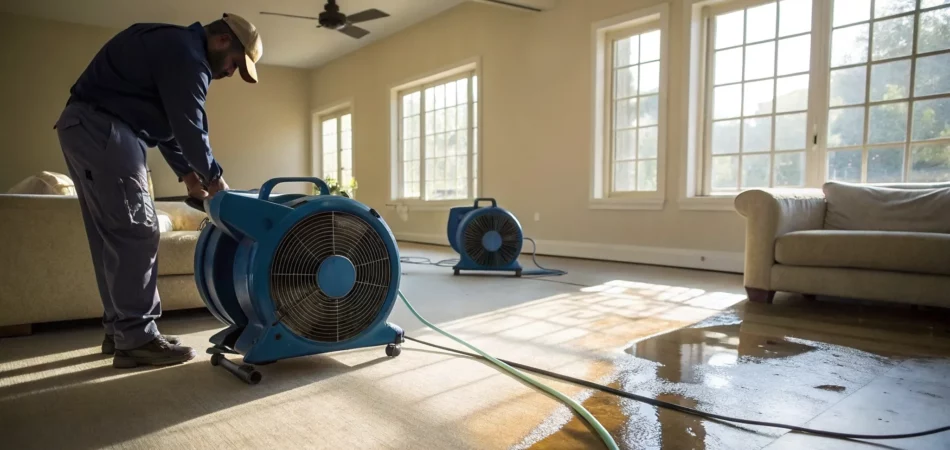
Once the standing water is gone, the real drying process begins. You might not see it, but moisture hides everywhere—in the air, within porous materials like wood and drywall, and under flooring. To tackle this hidden moisture, restoration experts bring in high-velocity air movers and industrial-grade dehumidifiers. The air movers create airflow across surfaces to speed up evaporation, while the dehumidifiers pull that moisture out of the air. This combination is key to preventing materials from warping, swelling, or breaking down. Professionals use moisture meters to monitor the drying process and ensure every corner of your property is returned to its proper moisture level.
Preventing Mold
Where there’s moisture, there’s a risk of mold. Mold can begin to grow in as little as 24 to 48 hours after water damage, posing a serious health risk and causing further damage to your property. That’s why a critical part of the restoration process is dedicated to mold prevention. After the area is thoroughly dried, professionals clean and sanitize all affected surfaces. They may use special antimicrobial treatments to kill existing mold spores and prevent new ones from growing. This step is essential for ensuring your home is not just dry, but also healthy and safe for you and your family. Proper environmental cleanup is non-negotiable.
Repairing and Rebuilding
The final step is putting everything back together. Once your property is clean, dry, and sanitized, the focus shifts to repairing and rebuilding the damaged areas. This can range from minor repairs, like replacing a section of drywall or carpet, to major reconstruction involving new flooring, cabinetry, or even structural work. The goal of this phase is to erase any signs of the flood damage. A company that offers complete restoration services can handle this entire process, from the initial cleanup to the final coat of paint, making the recovery journey much smoother for you.
Why You Need to Act Fast After a Flood
When water enters your home, the clock starts ticking. The moments immediately following a flood are the most important for protecting your property and your family’s health. Waiting even a day can dramatically increase the damage, leading to more complex repairs and higher costs. Getting professional help on-site as quickly as possible to start the water removal and drying process is key. This isn’t just about saving your floors; it’s about preventing long-term problems that linger long after the water is gone.
The Critical First 48 Hours for Mold Prevention
One of the biggest threats after water damage is mold. It doesn’t take long to appear—spores can begin to grow and multiply within just 24 to 48 hours in a damp environment. Once it takes hold, it can spread quickly through walls, flooring, and your HVAC system, creating a serious health hazard. Acting immediately is your best defense. A rapid water damage restoration response focuses on extracting water and drying everything out before mold has a chance to establish a foothold, protecting your home’s structure and indoor air quality.
Understanding the Health Risks of Floodwater
It’s crucial to remember that floodwater is rarely just water. It can be contaminated with everything from sewage and chemicals to bacteria. This is often called “black water,” and it poses significant health risks. Exposure can lead to infections and other illnesses. Beyond health concerns, this water soaks into everything it touches—drywall, insulation, and wood framing—compromising your home’s structural integrity. Professional environmental cleanup is essential to safely remove these contaminants and prevent lasting damage to your property.
What to Expect from an Emergency Response
When you call for help, you need a team that understands the urgency. A true emergency response means someone is available 24/7 to take your call and dispatch a crew immediately. At Drywizard, we pride ourselves on being on-site in 45 minutes or less. Once we arrive, our first priority is to assess the situation and begin extraction. Our certified experts use powerful equipment to handle emergency water damage and get standing water out fast. This immediate action is the first critical step in getting your home back to normal.
Walking Through the Restoration Process, Step by Step
When you’re standing in a flooded room, it’s hard to imagine how things will ever get back to normal. The good news is that professional restoration follows a structured, proven process. While every situation has its unique challenges, the core steps are designed to be efficient and thorough. A certified team will handle the technical details, but understanding the roadmap can give you peace of mind and a sense of control. From the initial inspection to the final coat of paint, here’s a step-by-step look at what you can expect during the flood damage restoration process. This journey is about more than just drying things out; it’s about safely and completely returning your property to its pre-damage state.
The Initial Assessment and Plan
The moment a restoration team arrives, their first priority is to perform a detailed assessment. They’ll identify the source of the water, determine the extent of the damage, and classify the type of water contamination to ensure safety protocols are followed. This isn’t just a quick look-around; technicians use moisture meters and other specialized tools to find hidden water in walls and under floors. Based on this thorough inspection, they will create a customized action plan. This plan outlines the specific steps, timeline, and equipment needed for your property’s water damage restoration, giving you a clear picture of the path forward.
The Water Removal Phase
With a solid plan in place, the next step is to get the water out—fast. Professionals use powerful, truck-mounted pumps and industrial-grade vacuums to extract thousands of gallons of standing water from your property. The goal is to remove as much water as possible, as quickly as possible. Speed is absolutely critical during this phase. The longer water sits, the more it soaks into porous materials like drywall, wood, and insulation, leading to more extensive damage and creating the perfect environment for mold growth. Prompt emergency water damage services are designed to minimize this secondary damage and set the stage for effective drying.
The Drying and Monitoring Phase
Once the standing water is gone, the focus shifts to removing the moisture you can’t see. The team will bring in high-velocity air movers and commercial-grade dehumidifiers to create airflow and pull remaining moisture from the air and affected materials. This process typically takes three to five days. Throughout this time, technicians will regularly monitor moisture levels in the walls, flooring, and air to ensure the area is drying properly. This scientific approach is crucial because mold can begin to grow in as little as 24 to 48 hours. Proper drying and dehumidifying stop mold in its tracks and prevent long-term structural problems.
Cleaning and Sanitizing Your Space
Floodwater often contains contaminants like bacteria, viruses, and other harmful microorganisms. That’s why cleaning and sanitizing are non-negotiable steps. After the drying is complete, the restoration team will thoroughly clean all affected surfaces and belongings. This may involve using special techniques for items like carpets and upholstery. They will also apply antimicrobial treatments to disinfect the area, prevent future mold growth, and control odors. This environmental cleanup ensures your home or business is not only dry but also safe and healthy for you to occupy again.
The Final Repairs and Reconstruction
The last step is putting everything back together. The level of repair needed will depend on the extent of the damage. For some, it might be as simple as replacing a section of drywall and painting. For others, it could involve more significant reconstruction, like installing new flooring, cabinetry, or structural elements. This is where your property truly transforms back to its pre-flood condition. A full-service company can manage this entire phase, from minor repairs to major rebuilding, ensuring a seamless transition from cleanup to complete restoration. This final touch makes your house feel like home again.
How to Choose the Right Flood Damage Restoration Company
When your property is underwater, the last thing you want is the added stress of vetting contractors. But the company you choose to handle your complete restoration will make all the difference. This isn’t just about cleaning up a mess; it’s about protecting your home’s structural integrity and your family’s health. A great restoration partner will respond quickly, communicate clearly, and have the right credentials and tools to do the job correctly from the start. Taking a few moments to look for the right qualifications can save you from bigger headaches, more expensive repairs, and long-term problems like mold down the road. It’s easy to feel rushed, but a hasty decision can lead to incomplete drying, hidden mold, and shoddy repairs. The right team brings not just equipment, but expertise and a process you can trust. They understand the science behind drying a structure and the urgency required to prevent secondary damage. Here are the key things to look for when making your decision.
Look for IICRC Certification and Training
First things first, check for certifications. The gold standard in our industry is the Institute of Inspection, Cleaning and Restoration Certification (IICRC). This isn’t just a fancy acronym; it means the technicians working in your home have been professionally trained on the best practices for water removal, drying, and sanitizing. An IICRC-certified team knows how to handle different types of water damage safely and effectively, ensuring no corners are cut. Hiring a certified company gives you peace of mind that the job will be done right, protecting your property and preventing future issues.
Prioritize 24/7 Emergency Availability
A pipe can burst at 2 a.m. on a holiday just as easily as it can on a Tuesday afternoon. Water damage doesn’t stick to a 9-to-5 schedule, and your restoration company shouldn’t either. Look for a team that offers true 24/7 emergency water damage services and guarantees a fast response time. The sooner the experts arrive, the more damage they can prevent. Water quickly soaks into drywall, flooring, and furniture, and mold can begin to grow in as little as 24 to 48 hours. A company that can be on-site in under an hour is dedicated to minimizing the impact on your home and your wallet.
Find a Team That Helps with Insurance Claims
After a flood, you’ll have enough on your plate without trying to become an insurance expert overnight. A top-tier restoration company will help you with the claims process. They should be experienced in working with all major insurance carriers and be able to document everything meticulously for your claim. Many professional companies even use the same estimating software as insurance adjusters, which helps streamline approvals and prevent delays. Having a team that can speak the language of insurance and advocate on your behalf is an invaluable asset during a stressful time.
Ensure They Use Professional-Grade Equipment
Restoring a water-damaged property requires more than a few fans and a wet/dry vac. A professional company will arrive with an arsenal of specialized equipment designed for fast and thorough drying. This includes powerful truck-mounted water extractors, industrial-grade air movers, and high-capacity dehumidifiers that pull moisture from deep within walls and floors. They’ll also use moisture meters and thermal imaging cameras to find hidden water pockets that could otherwise lead to mold and rot. The right tools are essential for a successful water damage restoration and a much faster recovery.
Check Their Local Reputation and Customer Reviews
Before you hire anyone, take a few minutes to see what past customers have to say. Check for reviews on Google, Yelp, and the Better Business Bureau (BBB). Are people in your community happy with the company’s work? Do they mention good communication, professionalism, and fair pricing? A strong local reputation built on positive, real-world experiences is one of the best indicators of a trustworthy company. You can learn a lot about how a team operates under pressure by reading their reviews, giving you confidence that you’re putting your home in good hands.
What Great Communication Looks Like During Restoration
When your property is underwater, the last thing you need is to be left in the dark about the restoration process. Dealing with flood damage is stressful enough without the added anxiety of not knowing what’s happening, who to call, or when your life will get back to normal. This is where a restoration company’s communication skills become just as important as their technical expertise. A great team doesn’t just show up and start working; they partner with you, keeping you informed and confident every step of the way.
From the moment you make that first emergency call, you should feel like a priority. The right company will explain their plan, answer your questions clearly, and set realistic expectations from the outset. They understand that this is your home or business, and you deserve to be involved and respected throughout the entire project. Constant, clear communication is the foundation of a smooth and successful water damage restoration and a key sign that you’ve hired true professionals who care about more than just the job—they care about your peace of mind.
Receiving Regular Progress Updates
You shouldn’t have to chase down your restoration team for an update. A professional crew will be proactive, providing you with regular check-ins on their progress. This might be a daily phone call, text, or email from your project manager detailing what was accomplished that day and what the plan is for tomorrow. These updates should be clear and easy to understand, avoiding technical jargon. Knowing what’s happening, when it’ll be done, and how any changes might affect the timeline or cost is essential. This level of transparency helps you feel in control during a chaotic time and ensures there are no unwelcome surprises along the way.
Getting a Clear and Honest Timeline
One of the first questions you’ll have is, “How long will this take?” While every flood damage scenario is unique, a reputable company will provide a clear and realistic timeline after their initial assessment. This schedule helps manage your expectations and reduces the anxiety that comes with uncertainty. Of course, unexpected issues can arise during a restoration project. A trustworthy team won’t just let a deadline pass; they will communicate any potential delays to you immediately, explain the reason, and provide a revised timeline. Honesty, even when the news isn’t ideal, is a hallmark of a company you can depend on to see the job through.
Having Direct Access to Your Project Manager
Feeling like you’re being passed from person to person is frustrating, especially when you have an urgent question. A well-organized restoration company will assign a dedicated project manager to your case. This person should be your single point of contact, available to answer questions, address concerns, and provide those all-important progress updates. Having direct access to the person overseeing your project builds a strong, trusting relationship. It ensures your voice is heard and that you can get accurate information quickly, which is critical when making decisions about your property’s complete restoration.
Reviewing Photo and Written Documentation
“A picture is worth a thousand words,” and that’s especially true in restoration. A professional team will thoroughly document the entire process with photos and detailed notes, from the initial damage to the final repairs. This documentation is not just for their records—it’s for you. It provides tangible proof of the work being done and is invaluable when you contact us or your insurance company. Being able to see the before-and-after photos and review written logs gives you confidence in the quality of the work and creates a clear, indisputable record for your insurance claim, making for a much smoother process.
Understanding the Cost of Flood Damage Restoration
Dealing with the aftermath of a flood is stressful enough without the added worry of unexpected costs. While it’s impossible to give a single price tag for restoration, understanding what influences the final bill can give you a sense of control. The total cost depends on the unique situation at your property, from the amount of water to the materials that were damaged. Knowing these factors can also help you have more productive conversations with your restoration team and your insurance company. Let’s walk through the key elements that determine the price of getting your home or business back to normal.
What Factors Influence the Price?
The cost of water damage restoration isn’t one-size-fits-all. The final price tag is shaped by several key factors. The most significant is the extent of the damage—a flooded basement will cost more to restore than a small leak in a single room. The type of water involved also matters; contaminated “black water” from a sewer backup requires more intensive cleaning and sanitization than clean water from a burst pipe. Other variables include the materials affected (porous drywall and carpet are harder to save than tile) and whether structural repairs or mold remediation are needed. A professional team will assess all these elements to create an accurate estimate.
How Insurance Coverage Works
A common misconception is that a standard homeowner’s policy covers all types of water damage, but that’s rarely the case. Most policies cover sudden and accidental damage, like a burst pipe, but exclude damage from gradual leaks or overland flooding. For flood-related damage, you typically need a separate policy from the National Flood Insurance Program (NFIP) or a private insurer. It’s so important to read your policy carefully to understand your specific coverage, limits, and deductible. This will clarify what you can expect to pay out-of-pocket and prevent surprises down the line. Knowing your coverage is the first step in a smooth claims process.
Tips for Working with Your Insurance Adjuster
Clear communication is your best tool when working with an insurance adjuster. From your first call, start a log of every conversation, noting the date, time, and who you spoke with. Document the damage thoroughly with photos and videos before any cleanup begins. Keep detailed records of all expenses, including any temporary housing costs if you’ve had to leave your home. A reputable restoration company will provide its own detailed documentation, including moisture readings and a full scope of the work, which is invaluable for your claim. Providing your adjuster with organized, comprehensive information helps streamline the process and ensures you get the coverage you’re entitled to.
Red Flags to Avoid When Hiring a Restoration Service
When your property is damaged, you’re under immense stress and need to make decisions quickly. Unfortunately, some companies take advantage of this urgency. Knowing the warning signs of a questionable restoration service is just as important as knowing what to look for in a great one. A wrong choice can lead to shoddy repairs, surprise costs, and future problems like mold growth, turning a bad situation into a nightmare.
Your goal is to find a trustworthy partner who will handle the job professionally and treat your home with respect. A reputable company will be transparent, qualified, and ready to answer all your questions without pressure. By keeping an eye out for a few key red flags, you can protect yourself from scams and ensure your property is restored correctly the first time. This will save you money, time, and a whole lot of headaches down the road.
Watch Out for Door-to-Door Solicitors
If a major storm or flood hits your neighborhood, be wary of contractors who suddenly appear at your door. These “storm chasers” often travel to disaster areas to find work, but they may lack the proper licensing, insurance, and local reputation. They might pressure you into signing a contract on the spot, often with vague terms. A professional restoration company won’t need to solicit business this way. Instead, stick with established, local experts you can research and verify. A quick check for a physical address and local customer reviews can help you find a team you can trust.
Question Unusually Low Estimates
Getting a low bid might feel like a lucky break, but it’s often a major red flag. Some contractors offer a rock-bottom price by cutting corners on essential steps. Proper water damage restoration is more than just vacuuming up water; it involves detailed moisture detection, thorough drying, dehumidification, and sanitizing to prevent mold. An unusually low estimate likely doesn’t account for this comprehensive work and could leave you with hidden moisture and future problems. Always ask for a detailed, itemized quote that outlines the full scope of the project to ensure you’re comparing apples to apples.
Verify Proper Licensing and Insurance
Never hire a restoration company without first confirming they are fully licensed and insured. This is non-negotiable. Proper licensing ensures they meet state and local standards, while insurance protects you from liability if a worker is injured on your property. Ask for proof of both general liability insurance and workers’ compensation. Reputable companies are proud of their credentials, like being IICRC Certified, and will gladly provide documentation. Hiring an uninsured contractor puts your finances and property at serious risk, so always do your due diligence before any work begins.
Spot Poor Communication Early On
How a company communicates with you from the very first call is a strong indicator of how the entire project will go. If they are hard to reach, vague with their answers, or unwilling to explain their process, consider it a red flag. You want a team that provides clear, consistent updates and makes you feel informed. A professional project manager should be able to explain the plan for a complete restoration and answer your questions patiently. If you feel rushed, pressured, or left in the dark, it’s best to find another company that values clear and empathetic communication.
Take the First Step to Restore Your Property
When you’re standing in a flooded room, it’s easy to feel overwhelmed. But the single most important thing you can do is act quickly. Taking immediate action is critical to preventing bigger problems down the road, like structural rot, electrical hazards, and mold growth that can begin within just 24 to 48 hours. The first step is to call for emergency water damage assistance to get the process started right away.
Many people think that restoration is just a matter of mopping up the visible water and setting up a few fans. In reality, that’s only the beginning. Proper water damage restoration is a scientific process that involves extracting standing water, using industrial-grade equipment to thoroughly dry hidden moisture from walls and floors, and sanitizing the area to prevent contamination. Trying to handle it yourself often leaves behind trapped moisture that can cause serious long-term issues.
Don’t make the mistake of assuming that only a massive flood requires professional help. Even a small leak from a burst pipe or a faulty appliance can seep into your subfloor and drywall, causing damage you can’t see. Professional leak detection can identify the source and extent of the problem, ensuring that every affected area is addressed. Getting an expert assessment is the only way to know for sure that your property is safe and truly dry. The best first step you can take is to contact a certified team to get an immediate assessment and a clear plan to get your home back to normal.
Related Articles
- How to Find the Best Flood Damage Restoration Near Me
- Flood Damage Restoration: A Step-by-Step Guide
Frequently Asked Questions
Can I just clean up a small flood myself? It’s tempting to try and handle a minor water issue on your own, but it’s rarely a good idea. The water you can see is often just the start. Moisture quickly seeps into drywall, subflooring, and insulation, creating a hidden breeding ground for mold. Professional restoration teams use specialized moisture meters to find this hidden water and industrial-grade equipment to ensure every layer of your home is completely dry, which is something fans and a shop vac simply can’t accomplish.
How long does the entire restoration process usually take? The timeline really depends on the extent of the damage. The initial water removal and drying phase typically takes about three to five days. However, the full restoration, including any necessary repairs or reconstruction, can take anywhere from a week to several months for more significant projects. A professional team will give you a much clearer and more realistic timeline after they complete their initial on-site assessment.
Will I have to move out of my house during the restoration? Whether you can stay in your home depends on the scope of the damage and the work being done. If the affected area is contained to one or two rooms, you might be able to stay. However, if the damage is widespread, involves sewage contamination, or requires major structural repairs, it’s often safer and more practical to relocate temporarily. The noise and presence of large equipment can also be very disruptive.
What should I do to stay safe while waiting for your team to arrive? Your safety is the top priority. If you can do so safely, shut off the electricity to the affected areas to prevent electrical hazards. Avoid walking through standing water, as it could be contaminated or hide tripping hazards. You can move important documents, photos, and small valuables to a dry, safe location, but don’t attempt any major cleanup or use household appliances to remove water.
Why does my house have a musty smell, and will it go away? That musty odor is a direct result of damp materials and the potential for mold and mildew to begin growing. It’s a clear sign that moisture is still trapped somewhere. A proper restoration process is designed to eliminate these odors completely. After thoroughly drying the structure, professionals clean and sanitize all affected surfaces with antimicrobial treatments, which neutralizes the source of the smell and leaves your home healthy and fresh again.