
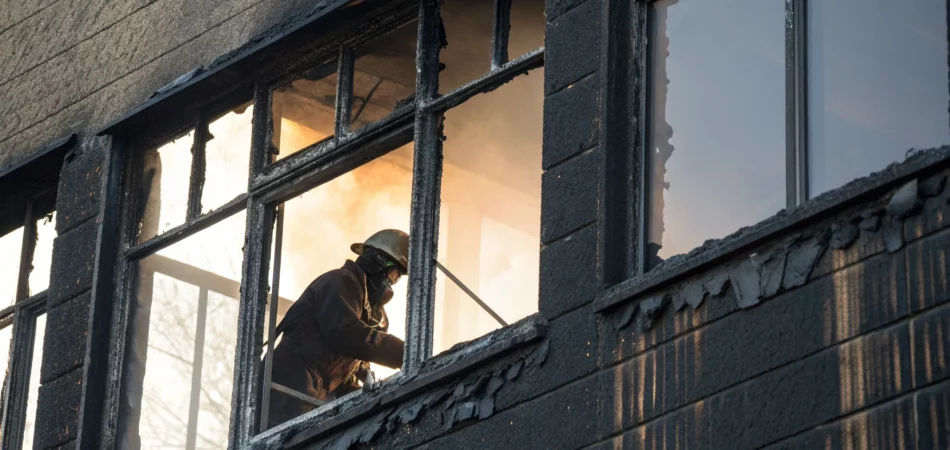
What is Commercial Fire Damage Restoration?
When a fire strikes your business, the path to reopening can feel overwhelming. Commercial fire damage restoration is the comprehensive process of cleaning, repairing, and restoring your commercial property to its pre-fire condition. It’s a specialized service that goes far beyond sweeping up ash and airing out the building. The primary goal is to get your business back on its feet safely and efficiently, minimizing downtime and financial loss.
This process addresses not only the visible charring from flames but also the widespread damage caused by smoke, soot, and the water used to extinguish the fire. A professional team uses specific techniques and industrial-grade equipment to handle everything from structural repairs to eliminating stubborn odors. Think of it as a systematic approach to recovery, designed to tackle the unique challenges that commercial properties—like offices, retail stores, or warehouses—face after a fire.
After a fire, the most obvious damage is what the flames touched. But the real, lasting problems often come from what you can’t easily see. Acidic soot corrodes electronics, smoke odor embeds itself deep into walls and inventory, and the water used to fight the fire creates a perfect environment for mold. A simple cleanup won’t fix these issues. You need a comprehensive commercial fire damage restoration plan that addresses every layer of damage. This guide explains the entire process, covering the hidden dangers and outlining the professional steps required to make your property truly safe, clean, and ready for business again.
Key Takeaways
- Focus on the invisible threats first: The most lasting damage from a fire isn’t always the char, but the acidic soot, pervasive smoke, and firefighting water. These cause corrosion, lingering odors, and structural issues that require immediate, professional attention.
- Your first call dictates your recovery speed: Choosing a certified, 24/7 restoration company with proven commercial experience is the single most important step. A rapid response is essential to mitigate further damage, which saves you time and money in the long run.
- Document everything before you clean anything: A successful insurance claim relies on clear evidence. Before any items are moved or restoration begins, take extensive photos and videos of all damage to create a thorough record for your insurer.
Understanding Damage Beyond the Flames
The most obvious damage from a fire is what the flames touch directly, but the real trouble often spreads much further. Soot and smoke are the silent culprits that can infiltrate every corner of your property, even rooms untouched by the fire itself. These acidic residues cling to walls, settle in your HVAC system, and coat equipment and inventory, causing corrosion and staining.
The smoke odor can permeate porous materials like drywall, carpeting, and upholstery, making it nearly impossible to remove with standard cleaning methods. A professional fire and smoke restoration service is essential because it targets this hidden damage. Experts know how to properly clean and deodorize affected areas to prevent long-term harm and ensure the air quality is safe for you, your employees, and your customers.
Protecting Your Business and Bottom Line
Every hour your business is closed represents lost revenue and a potential loss of customers. Attempting a DIY cleanup or delaying professional help can lead to bigger problems and even greater costs down the road. Professional commercial restoration is an investment in your business’s future. Certified technicians use specialized equipment to thoroughly clean and sanitize your property, ensuring the job is done correctly the first time.
While some business owners worry about the cost, professional restoration actually prevents the more expensive, long-term consequences of incomplete cleaning, such as permanent staining, persistent odors, and structural issues. Getting experts on-site quickly means a faster, more effective recovery, which is the surest way to protect your bottom line and get your doors back open.
Meeting Legal and Safety Requirements
After a fire, your property isn’t just dirty—it can be dangerous. Structural integrity may be compromised, electrical systems could be hazardous, and the air can be filled with toxic particles. A critical part of the restoration process is ensuring your building is safe and compliant with all local building codes and health regulations before you welcome back employees and customers.
A reputable restoration company will handle the necessary inspections and repairs to meet these legal and safety standards. They will assess structural stability, check electrical and plumbing systems, and perform air quality tests to confirm the environment is healthy. This step is non-negotiable for protecting yourself from liability and providing a secure space for everyone who walks through your doors.
What Does the Restoration Process Involve?
Recovering from a fire is more than just cleaning up what you can see. A professional restoration process is a multi-stage operation designed to safely and thoroughly return your commercial property to its pre-loss condition. It addresses everything from the initial emergency call to the final structural repairs, ensuring no detail is overlooked. Each step is critical for mitigating further damage, protecting your assets, and getting your business back on its feet as quickly as possible. Understanding this process can help you know what to expect when you make that all-important call for help.
Immediate Response and Damage Assessment
The moment the fire department leaves, the clock starts ticking. A rapid response is crucial to prevent secondary damage from soot, smoke, and water. The first thing a professional team does upon arrival is conduct a thorough damage assessment. They have the expertise and specialized equipment to determine the full extent of the fire, smoke, and water damage—including issues that aren’t visible to the naked eye. This initial inspection forms the basis for a detailed restoration plan, giving you a clear roadmap for recovery and the necessary documentation for your insurance claim.
Smoke and Soot Removal
Smoke and soot are invasive and acidic, causing discoloration, corrosion, and persistent odors long after the fire is out. Simply painting over the stains won’t solve the problem. Professional fire and smoke restoration involves using specialized equipment and cleaning techniques to meticulously remove these residues from all affected surfaces, including walls, ceilings, and HVAC systems. This step is essential for preventing long-term staining and deterioration and is a critical part of making the indoor environment safe and clean for your employees and customers.
Water Damage Cleanup from Firefighting
Where there’s a fire, there’s almost always water damage. The massive amounts of water used by firefighters to extinguish the flames can saturate your building’s structure, flooring, and contents. If not addressed immediately, this can lead to swelling, warping, and dangerous mold growth. A key part of the restoration process is professional water damage restoration, which includes extracting standing water, and using industrial-grade dehumidifiers and air movers to completely dry the property. This prevents further structural issues and protects the building’s integrity.
Structural Repairs and Reconstruction
Once the property is clean, dry, and decontaminated, the focus shifts to rebuilding. This phase can range from minor repairs like replacing drywall and painting to major reconstruction of heavily damaged areas. A qualified restoration company will handle all aspects of the structural repairs, ensuring the work meets all local building codes and safety standards. The goal is to provide a complete restoration that seamlessly returns your property to its original state, making it feel like the disaster never happened.
Content and Asset Restoration
A fire doesn’t just damage the building; it threatens your inventory, equipment, documents, and other essential business assets. Experienced restoration professionals use modern techniques to salvage and restore many of these items. This can include specialized cleaning for electronics, document drying, and furniture refinishing. By restoring valuable contents instead of replacing them, you can often save significant time and money, helping your business recover more efficiently and preserving important assets that might otherwise be lost for good.
Air Decontamination and Purification
Lingering smoke odors are a stubborn reminder of a fire and can pose health risks due to microscopic soot particles in the air. Professional restoration teams use advanced air purification technology, such as thermal foggers and ozone generators, to neutralize odors and decontaminate the air. This process removes harmful particles from the air and within porous materials, ensuring the air quality is safe and healthy. Proper environmental cleanup is the final touch that makes your property truly ready for re-occupancy.
Business Continuity Planning During Fire Restoration
Maintaining business operations during commercial fire damage restoration requires strategic planning and expert coordination. The first 24-48 hours are critical for establishing temporary operations and minimizing revenue loss. Work with your restoration team to identify which areas of your facility can remain operational while others undergo restoration.
Consider relocating essential operations to undamaged sections of your building or securing temporary office space nearby. Drywizard Restoration specializes in phased restoration approaches that allow businesses to resume partial operations quickly. We coordinate with your IT department to protect and restore digital assets, ensuring critical data remains accessible throughout the restoration process.
Our team works around your business schedule when possible, performing noisy or disruptive work during off-hours to minimize operational impact. We also maintain detailed daily reports for your insurance company and stakeholders, providing transparency throughout the restoration timeline.
With proper planning and professional restoration services, most businesses can resume normal operations within 30-60 days, depending on the extent of damage.
How to Choose the Right Restoration Company
After a fire, the last thing you want is the added stress of finding a reliable partner to handle the cleanup. The company you choose will be responsible for getting your business back on its feet, so it’s a decision that carries a lot of weight. You need a team that is not only skilled but also trustworthy and efficient. When you’re evaluating your options, focus on a few key areas: their qualifications, their specific experience with commercial properties, how they handle insurance claims, and their approach to communication. Getting these things right from the start will make the entire restoration process smoother and give you peace of mind that your property is in capable hands.
Look for Key Certifications and Credentials
When you’re looking for a restoration company, start by checking their qualifications. Industry certifications are more than just fancy badges; they show a company’s commitment to high standards and ongoing training. The most respected certification in the industry comes from the Institute of Inspection, Cleaning and Restoration Certification (IICRC). A company with IICRC-certified technicians has proven its expertise in the latest restoration techniques and safety protocols. This ensures they won’t be learning on your time. Choosing a certified team means you’re hiring professionals who know how to handle fire, smoke, and water damage correctly, protecting both your property and your people.
Verify Commercial Experience and Response Time
Restoring a commercial property is a different ballgame than fixing up a house. The scale is larger, the systems are more complex, and every minute of downtime costs you money. That’s why you need a company with proven experience in commercial restoration. Ask potential companies about similar projects they’ve handled. Equally important is their response time. In an emergency, you can’t afford to wait. A top-tier restoration company should be on-site within an hour to assess the damage and start mitigation. A rapid response is critical to preventing further damage from soot and water, which ultimately saves you time and money.
Ask About Insurance Claim Assistance
Dealing with insurance paperwork is often one of the most frustrating parts of the restoration process. A great restoration company will do more than just the physical repairs; they’ll also help you with your insurance claim. These teams work with insurance companies every day and understand how to document damage, file claims correctly, and communicate effectively with adjusters. This assistance is invaluable, as it helps ensure you get the full coverage you’re entitled to without the headache of managing the process alone. Look for a partner who can guide you through the complexities and advocate on your behalf.
Review Their Communication Process
During a chaotic time, clear and consistent communication is essential. A reliable restoration company will keep you in the loop every step of the way. Before you hire anyone, ask about their communication process. Will you have a single point of contact? How often can you expect updates? You should feel confident that your questions will be answered promptly and that you’ll be informed about progress, timelines, and any unexpected issues that arise. Reading through a company’s customer reviews can also give you a good sense of how well they communicate and support their clients through the restoration journey.
What Affects Restoration Costs and Timelines?
After a fire, two of the most pressing questions are, “How long will this take?” and “How much will it cost?” The honest answer is: it depends. Every fire is unique, and the path to recovery isn’t one-size-fits-all. Several key factors influence the scope of your commercial restoration project, from the initial damage to the final paperwork. Understanding these variables can help you set realistic expectations and feel more in control during a challenging time. Let’s break down what goes into determining the timeline and budget for getting your business back on its feet.
The Extent and Type of Damage
The single biggest factor is the severity of the fire itself. A small, contained fire that was extinguished quickly will require a much shorter restoration process than one that spread through multiple rooms or caused structural harm. Minor damage might be resolved in just a few days, while a major event can take weeks or even months. It’s also important to remember that damage goes beyond what you can see. We assess not just the areas burned by flames but also the impact of smoke, soot, and intense heat, which can travel far from the fire’s origin and affect sensitive equipment and materials.
Property Size and Complexity
The size and layout of your commercial property play a significant role. A large warehouse will naturally take more time to clean and restore than a small retail shop. However, complexity matters just as much as square footage. An office building with numerous individual rooms, complex HVAC systems, and delicate electronics presents a more intricate challenge than an open-plan space. The types of materials affected also influence the cost and timeline. Restoring historic woodwork, for example, requires a different approach and skillset than repairing modern drywall, and our team plans accordingly to handle the specific needs of your property.
Secondary Damage and Hidden Hazards
Often, the initial fire is just the beginning. The water used to extinguish the flames can cause significant secondary damage, soaking into floors, walls, and inventory. If not addressed immediately, this can lead to structural issues and dangerous mold growth. A crucial part of any fire and smoke restoration project is professional water extraction and drying. We also inspect for other hidden hazards, such as compromised structural integrity or harmful chemicals released from burnt synthetic materials, ensuring the entire environment is safe before you re-enter.
Your Insurance Coverage and Claims Process
The administrative side of restoration can also affect the timeline. Before major repairs can begin, the damage must be documented and the scope of work approved by your insurance provider. This process involves detailed assessments, estimates, and communication between the restoration company and your insurance adjuster. A delay in the claims process can unfortunately lead to a delay in the physical work. We help streamline this by providing thorough documentation and maintaining clear communication with your insurer, ensuring all requirements are met so work can proceed as quickly as possible.
What to Do Immediately After a Commercial Fire
The smoke has cleared, and the firefighters are leaving. Standing in front of your business, it’s easy to feel overwhelmed and unsure of what to do next. The moments and days following a fire are critical for protecting your property, your assets, and your ability to reopen. Taking the right steps in the right order can make a significant difference in the outcome of your recovery process. It’s about more than just cleaning up; it’s about mitigating further damage, handling the insurance process smoothly, and getting your operations back on track as safely and quickly as possible.
This isn’t just a checklist—it’s a strategic plan to regain control after a chaotic event. From ensuring the safety of your team to documenting every detail for your insurance claim, each action you take is a step toward recovery. Remember, you don’t have to handle this alone. A professional restoration team can guide you through the technical aspects, allowing you to focus on your employees, customers, and the future of your business. The goal is to move forward methodically, addressing immediate hazards first and then laying the groundwork for a thorough and effective commercial restoration.
Prioritize Safety and Secure the Property
Before you do anything else, your absolute first priority is safety. Do not re-enter your property until the fire department has officially declared it safe. Even if the flames are out, the building could have hidden dangers, including structural weaknesses, electrical hazards, or poor air quality from soot and smoke. Once you have the green light from officials, the next step is to secure the premises. A fire can leave your building vulnerable to break-ins or further damage from the elements. Professional restoration companies can immediately board up broken windows and damaged doorways to protect what’s left inside and prevent unauthorized access while you plan your next steps.
Contact Your Restoration Team
After ensuring everyone is safe and calling your insurance agent, your next call should be to a 24/7 emergency restoration company. Time is critical. The longer soot, smoke, and water from firefighting efforts sit, the more damage they cause. Soot is acidic and can corrode surfaces, while smoke odor can permanently permeate porous materials. A rapid response team like Drywizard can be on-site within minutes to assess the situation and begin the fire and smoke restoration process. They have the specialized equipment and certified expertise to handle everything from water extraction to soot removal, preventing secondary damage and setting the stage for a successful recovery.
Document the Damage for Insurance
A smooth insurance claim process starts with thorough documentation. Before anything is moved, cleaned, or thrown away, you need to create a detailed record of the damage. Once it’s safe to enter the property, use your phone to take extensive photos and videos of every affected area. Capture wide shots of rooms and close-ups of damaged equipment, inventory, and structural elements. Make a written list of all destroyed or damaged items. This visual and written evidence is invaluable when you file your claim and will help ensure you receive fair compensation to cover your losses. Your restoration company can often assist in this process, helping you identify and catalog the full extent of the damage.
Protect Undamaged Property
Not everything in your commercial space will be a total loss. It’s important to protect any salvageable assets from further harm. This may involve carefully moving undamaged inventory, equipment, or important documents to a secure, off-site location. If that’s not possible, your restoration team can help relocate items to an unaffected area of the building and protect them with tarps. This step, often part of a complete restoration service, minimizes your total losses and preserves assets that are critical for getting your business running again. Protecting what wasn’t damaged is just as important as restoring what was.
Related Articles
- Fire & Smoke Damage Restoration in Tampa, FL
- How to Choose a Water Damage Restoration Company – Drywizard Restoration & Drywall Inc.
- 3 Reasons Dry Out is Critical in Water Damage Restoration
- Flood Damage Restoration: A Step-by-Step Guide – Drywizard Restoration & Drywall Inc.
- Cleaning Services Near Me: A Guide to Costs – Drywizard Restoration & Drywall Inc.
Frequently Asked Questions
Can I handle the cleanup myself to save money? While the desire to save money is completely understandable, attempting a DIY cleanup after a fire is risky for both your property and your finances. Soot is acidic and can cause permanent damage if not removed with the right techniques. Plus, the water used to put out the fire can lead to hidden mold and structural problems if not professionally dried. Hiring a certified team ensures the job is done safely and correctly, preventing more expensive, long-term issues down the road.
What’s the difference between fire damage and smoke damage? Fire damage refers to the direct destruction caused by flames, like charred wood or melted materials. Smoke damage is much more widespread and sneaky. It’s the acidic soot residue and persistent odor that can travel through your HVAC system and settle in rooms the fire never even touched. This residue can corrode electronics and stain surfaces, while the odor can deeply penetrate walls and furniture, making professional removal essential.
Will my business have to stay closed during the entire restoration process? The primary goal is always to get you back in business as quickly and safely as possible. The initial stages, like damage assessment and major cleanup, will likely require the property to be vacant for safety reasons. However, depending on the scale of the damage, a professional restoration company can sometimes work in phases. This approach may allow you to reopen certain sections of your business while work continues in others, minimizing your total downtime.
How do I know the building is truly safe for my employees and customers afterward? A professional restoration project isn’t finished until the property is confirmed to be safe for re-occupancy. This involves more than just a visual inspection. A reputable company will conduct thorough air quality tests to ensure harmful particles from smoke and soot have been eliminated. They also handle necessary structural assessments and ensure all repairs meet local building codes, giving you documented proof that the environment is secure.
My insurance company recommended a restoration company. Do I have to use them? You are not required to use the restoration company your insurer suggests. As the property owner, you have the right to choose the certified and insured company you feel most comfortable with. It’s important to select a team that you trust to act in your best interest, provide clear communication, and has proven experience with commercial properties. Your chosen company will work directly with your insurance adjuster to ensure the process is handled correctly.